



As winter rolls in, many of us start to experience those familiar cold weather sniffles. But what is causing them? Knowing the difference between these conditions, especially when you're wondering about hay fever vs flu, can help you manage your health better and get the right treatment.
In this blog, we’ll help you figure out how to tell the difference between a cold, the flu, and hay fever, and offer some advice on what you can do to feel better.

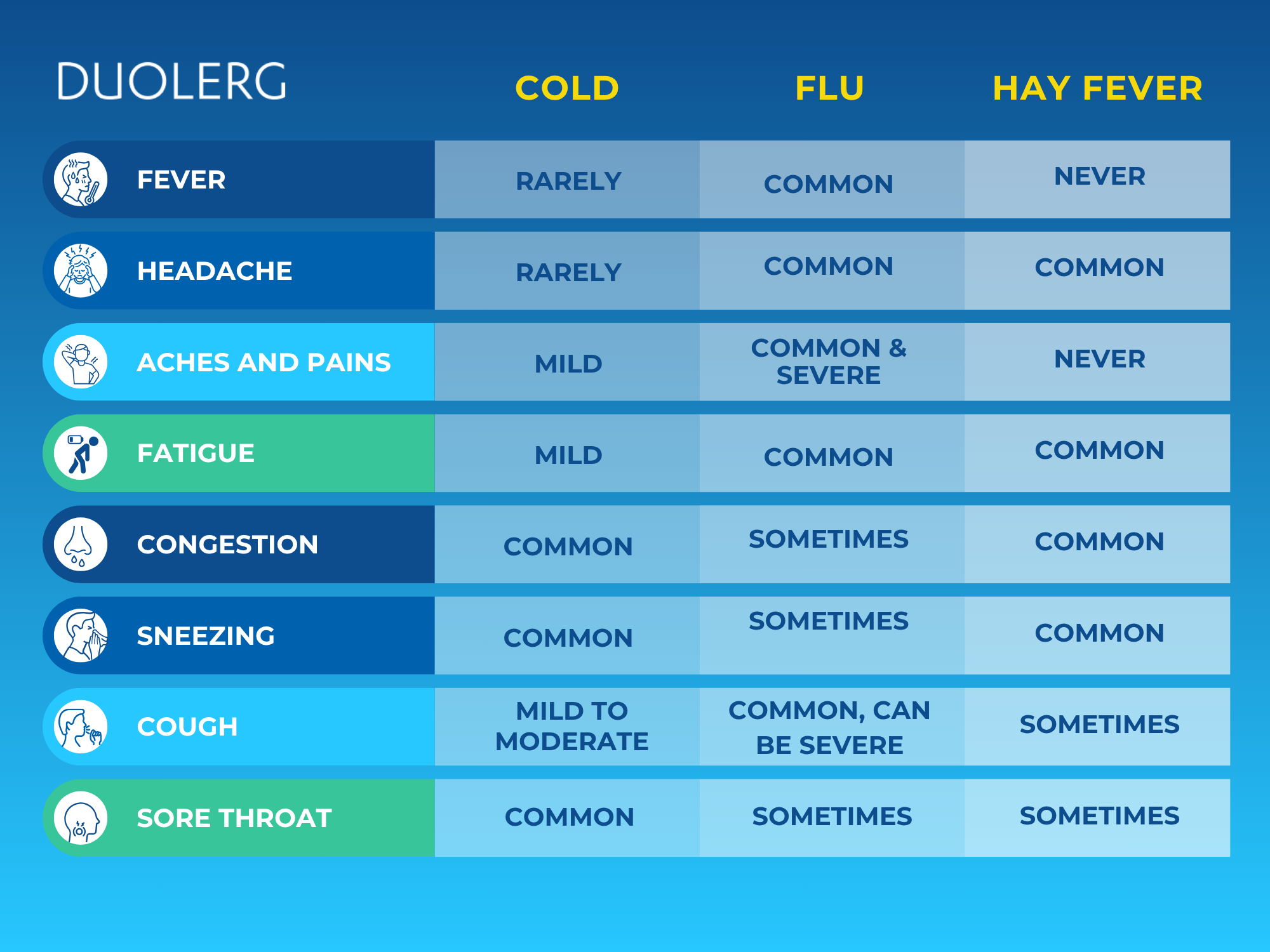
It’s easy to confuse the symptoms of a cold, flu, and hay fever, especially when they share common traits like a runny nose and congestion. But there are key differences that can help you figure out what’s really going on.
Colds are caused by viral infections and are usually mild, though they can still leave you feeling miserable. Like allergies, colds develop gradually. A cold will usually resolve itself within a week to 10 days. This is shorter than the flu where some symptoms can persist for weeks. The symptoms of a cold are mostly confined to the upper respiratory system and rarely cause fever and are more likely to include a runny or stuffy nose.
Like a cold, the flu is caused by a virus. However, this virus is different to the one that causes a cold and can be a bit more intense. Unlike allergies or a cold, the flu can come on suddenly. Because the flu is more intense than a cold and can leave you bedridden for a few days. In some cases, the flu can lead to serious secondary infections like pneumonia and may require medical attention, especially if you have underlying health conditions.
Hay fever is an allergic reaction to airborne substances like pollen, dust mites, or pet dander. While its symptoms overlap with colds and the flu, it is caused by an entirely different trigger: allergens. Unlike colds and flu, hay fever symptoms are often seasonal. However, indoor allergens like dust mites can cause symptoms year-round. Hay fever also typically lasts as long as the person is exposed to an allergen, rather than resolving after a certain amount of time.
When it comes to recovering from allergies, treatment is generally quite simple, involving anti-allergy medication. Duolerg is an example of an anti-allergy medication that can help resolve hay fever symptoms. Unlike other allergy medications, Duolerg has a double action that addresses the typical symptoms like sneezing, itching, and a runny nose, as well as congestion, offering effective allergy relief.
When it comes to colds and flu, the focus is on symptom relief. Hydration, rest, and sometimes pain relievers are often recommended. Some doctors may also prescribe an anti-allergy medication to help with congestion or a runny nose. Duolerg can be an effective choice for addressing congestion, especially if you’re dealing with inflammation in your nasal passages. This is thanks to its double-action formula that addresses inflammation directly, helping to clear up congestion without the drowsiness that often comes with allergy medication.
While the symptoms of colds, flu, and hay fever can look similar, their causes, and treatments, are quite different. Colds and flu are viral and usually resolve with rest and fluids. Hay fever, on the other hand, is an allergic condition that may persist without proper treatment. If your symptoms are triggered by allergens, Duolerg’s non-drowsy, double-action formula could be the right choice for comprehensive relief. When in doubt, speak to a healthcare provider to get the right diagnosis and treatment.



